
 By AsimAli
 Eid is a special occasion when children want to look stylish, comfortable, and festive at the same time. Choosing the right fit is just as important as selecting attractive colors, embroidery, and fabric. Well-fitted pakistani kids clothes should allow children to move freely while still giving them a neat and polished appearance. 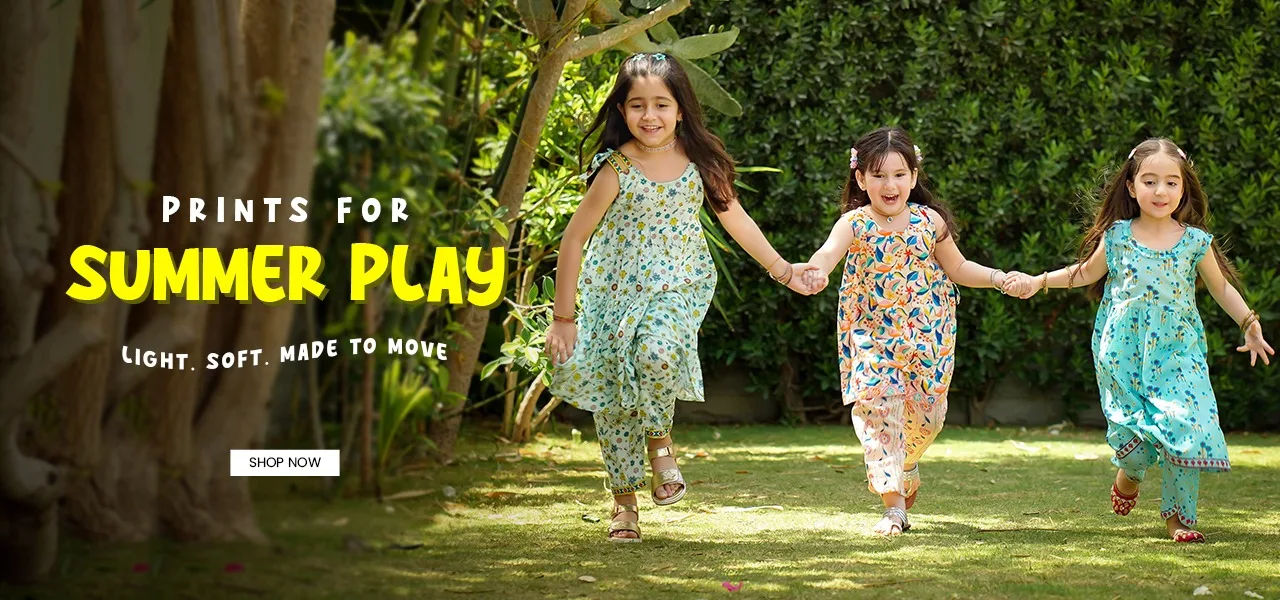 Clothes that are too tight can feel uncomfortable during long Eid visits, while oversized outfits may look untidy and become difficult to manage.Finding the right balance can be easier when parents understand how different traditional outfits should fit. Whether a child is wearing a shalwar kameez, kurta pajama, frock, gharara, sharara, or a more modern traditional outfit, the fit should suit the child's age, body shape, activity level, and personal comfort.
Why Proper Fit Matters for Eid Outfits
Eid usually involves much more activity than an ordinary day. Children may visit relatives, play with cousins, attend prayers, sit for family meals, and spend hours moving around.
An outfit that looks beautiful on a hanger may not necessarily be practical for a child. Tight sleeves, stiff fabric, restrictive waistbands, or overly long hems can quickly become irritating.
The ideal fit should make the child feel comfortable without making the outfit appear loose or shapeless. A good outfit follows the child's natural body shape while leaving enough room for normal movement.
Parents should also remember that children grow quickly. Buying an outfit slightly larger can sometimes be practical, but there is a difference between allowing room for growth and choosing clothing that is several sizes too large.
How Should a Kurta or Kameez Fit?
Choosing the Right Length
For boys, a kurta should generally fall comfortably around the knee or slightly above or below it, depending on the style. The exact length can vary according to current fashion and the child's age.
The most important consideration is movement. A very long kurta can become inconvenient when children run or climb stairs. A very short one, on the other hand, may lose the traditional appearance parents are looking for.
For girls wearing a kameez, the length can be longer, especially with traditional trousers, shalwars, or churidars. However, it should still be easy to walk in.
Checking the Shoulder Fit
The shoulder seam should sit close to the natural edge of the child's shoulder. If it extends too far down the arm, the garment may look oversized.
If the seam pulls inward or feels tight when the child moves their arms, the size may be too small.
A simple test is to ask the child to raise both arms, stretch forward, and move normally. If the garment stays comfortable during these movements, the shoulder fit is likely appropriate.
Getting the Sleeves Right
Sleeves should allow children to bend their elbows and move their arms without restriction.
For long sleeves, the cuff should reach approximately the wrist. Sleeves that extend significantly beyond the hands can become messy during meals and play.
Parents should pay particular attention to cuffs with buttons or decorative stitching. These details should not press tightly against the wrist.
How Should Shalwar and Pajama Fit?
Traditional trousers should provide enough space around the waist, hips, and thighs for comfortable movement.
Waist Comfort
An elastic waistband can be particularly useful for younger children because it allows flexibility. However, elastic should not be so tight that it leaves deep marks on the skin.
For drawstring styles, the string should hold the trousers securely without needing to be pulled excessively tight.
Children may spend several hours wearing their Eid clothes, so a comfortable waist can make a significant difference.
Leg and Ankle Fit
The trouser legs should allow children to walk naturally. Extremely narrow pajama legs can restrict movement, especially when children sit on the floor or play.
At the same time, excessively long trousers can drag on the ground and become a tripping hazard.
For younger children, keeping the hem safely above the floor is especially important.
Fitting Girls' Traditional Eid Dresses
Girls' Eid clothing comes in many different styles, including frocks, anarkalis, shararas, ghararas, lehengas, and embellished kameez sets.
The right fit depends heavily on the design.
Frocks and Anarkali Dresses
A frock should fit comfortably around the shoulders and chest while allowing the skirt portion to move freely.
The waist should not feel restrictive. Children often move between sitting, standing, walking, and playing, so the dress should accommodate these activities.
For anarkali-style outfits, parents should make sure the flare does not make walking difficult. Decorative layers can add weight, so the overall garment should remain manageable for the child.
Sharara and Gharara Sets
Sharara and gharara outfits usually have wide-legged trousers paired with a shorter or longer kameez.
The trousers should sit securely at the waist without excessive tightness. The length should also be checked carefully.
Because these garments are naturally loose and flowing, there is usually no reason to buy them several sizes too large. An excessively long hem can collect dirt and interfere with walking.
Lehenga Outfits
A children's lehenga should sit securely around the waist. If the waistband is too loose, the skirt may slip during movement.
If the outfit has a drawstring, adjustable waistband, or elastic section, it can provide additional flexibility as the child grows.
Parents should also check the weight of the embellishments. Heavy decorations can make a beautiful outfit uncomfortable after several hours.
Fit According to a Child's Age
Different age groups have different clothing needs.
Toddlers
For toddlers, comfort and safety should come first. Avoid outfits with extremely tight waistbands, long trailing pieces, or complicated closures.
Soft fabrics and flexible waistbands are usually more practical. Decorative elements should also be securely attached.
Toddlers are likely to crawl, run, sit, and play throughout the day, so their clothing should support unrestricted movement.
School-Age Children
School-age children are often more aware of their appearance. They may have strong preferences about colors, designs, and styles.
At this age, parents can involve children in choosing their Eid outfits.
The clothes should still prioritize movement. A stylish outfit becomes less enjoyable when a child cannot comfortably sit, walk, or play.
Teenagers
Older children may prefer more fashionable and fitted designs. However, fitted should not mean restrictive.
Shoulders, sleeves, waist, and hips should remain comfortable. Teenagers may also wear their Eid outfits for longer periods, making fabric comfort especially important.
Allowing Room for Growth
Children can outgrow clothing surprisingly quickly, which makes sizing a common concern for parents.
Buying clothes with a small amount of extra room can be sensible. However, excessive extra fabric can affect the appearance and practicality of the outfit.
The best approach is to choose clothing that fits well now while leaving modest room for growth.
Adjustable features can be particularly useful. Elastic waistbands, cuffs, button adjustments, and drawstrings can extend the useful life of an outfit without making it look oversized.
How Fabric Affects the Fit
Fit is not only about measurements. Fabric also changes how clothing feels.
Cotton and lightweight lawn can be comfortable choices for warmer Eid weather. Softer fabrics can help prevent irritation when children wear an outfit for several hours.
Some heavily embroidered materials can feel stiff or scratchy against sensitive skin. If the decorative work is concentrated around the neckline, sleeves, or waist, check whether it causes discomfort.
The best pakistani kids clothes combine attractive traditional designs with materials that allow children to remain comfortable.
Check the Neckline and Armholes
The neckline should sit comfortably without pressing against the child's neck.
A neckline that is too tight can become particularly uncomfortable when the child is sitting or moving.
Armholes should also provide enough space for natural arm movement. If the fabric pulls around the armpits when the child raises their arms, the garment may need a larger size.
These details are easy to overlook when shopping online, but they can have a major impact on comfort.
Consider Eid Activities Before Choosing a Fit
Parents should think about what the child will actually do during Eid.
If the child will mostly attend family gatherings and sit indoors, a more decorative outfit may work well.
If the child will spend time playing outdoors, a lighter and more flexible outfit may be better.
Children should not have to remain completely still to protect their clothes. Traditional Eid fashion can still be practical enough for normal childhood activities.
How to Check the Fit Before Eid
Trying the complete outfit before Eid morning is one of the easiest ways to avoid problems.
Ask the child to walk, sit, bend, raise their arms, and move naturally.
Check whether the waistband stays comfortable and whether sleeves remain in the correct position.
Look at the trouser or skirt length while the child is wearing their usual Eid footwear. Shoes can slightly change how long an outfit appears.
Parents should also inspect buttons, zippers, hooks, and decorative pieces. Everything should be secure and easy enough for the child to manage.
Common Fit Mistakes to Avoid
Buying Too Large
Parents sometimes purchase very oversized clothing because they want the child to wear it again later.
A little extra room is useful, but excessive sizing can make traditional clothing look unbalanced. Long sleeves and hems can also create safety problems.
Choosing Style Over Comfort
Beautiful embroidery and fashionable cuts can make an outfit attractive, but comfort should never be ignored.
If a child dislikes the way an outfit feels, they may avoid wearing it regardless of how expensive or attractive it is.
Ignoring the Child's Opinion
Children, especially older ones, can usually explain what feels uncomfortable.
Parents should listen when a child says that the collar is too tight, the fabric scratches, or the trousers are difficult to move in.
Comfort and personal preference can work alongside traditional Eid fashion.
Finding the Right Balance Between Traditional and Modern
Modern pakistani kids clothes often combine traditional silhouettes with contemporary cuts, colors, and decorative details.
Parents do not have to choose between tradition and practicality. A simple kurta can look festive with tasteful embroidery, while a comfortable shalwar can maintain a traditional appearance without restricting movement.
For girls, traditional silhouettes can also be adapted with lighter fabrics, comfortable waistbands, and age-appropriate designs.
The goal is not to make children's clothing look exactly like adult clothing. Instead, children's Eid fashion should preserve cultural beauty while respecting the needs of growing children.
Conclusion
The best Eid outfit is one that looks beautiful and feels comfortable at the same time. Properly fitted pakistani kids clothes should allow children to walk, sit, play, and celebrate without constantly adjusting their clothing.
Parents should pay attention to shoulder width, sleeve length, waist comfort, trouser length, necklines, armholes, and the overall weight of the outfit. These small details can make a major difference during a long Eid day.
It is also important to consider the child's age and personality. Toddlers need flexible and safe designs, school-age children need room to move, and teenagers may want fashionable styles that still provide comfort.
Buying slightly larger clothing can be practical when children are growing, but an outfit should never be so oversized that it becomes uncomfortable or unsafe. Adjustable waistbands and other flexible features can provide a useful middle ground.
Ultimately, Eid clothing should help children enjoy the celebration rather than limit them. When traditional style, suitable sizing, comfortable fabrics, and freedom of movement come together, children can look their best while confidently enjoying every part of Eid.