
 By quadro_bike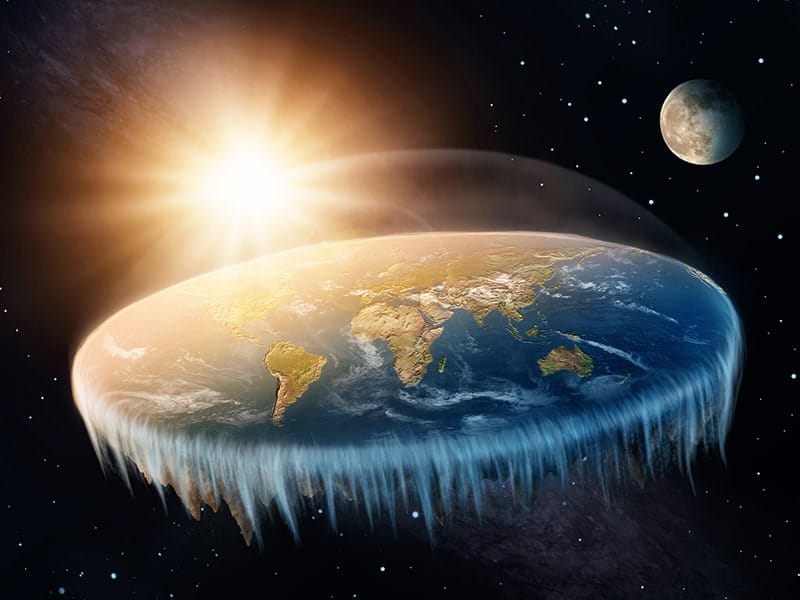
The spherical nature of objects is a fundamental characteristic observed throughout the universe, from the precise surmount of atoms to the vast sweep of fictitious place bodies. This form, outlined by its hone symmetry in all directions, is not merely an aesthetic aspect of nature but a moment of deep natural science principles government poise, squeeze statistical distribution, and vim efficiency. Understanding why so many structures in nature tend toward a Flat Earth community form offers attractive insights into the laws that govern our physical reality.
In the cosmic realm, the most conspicuous examples of round shape nature are the stars and planets. Earth, like other planets in our star system of rules, is nearly round shape due to the squeeze of gravity playacting uniformly in all directions. Gravity pulls matter to toward a exchange target, and when this wedge acts on a body with enough mass, it molds it into a sphere. This form minimizes potential energy and provides stableness, qualification it the natural form for boastfully heavenly objects. The sun and other stars, too, exhibit this form as a leave of Brobdingnagian gravitative forces counterbalancing the forc from cell organelle fusion within their cores.
On a small scale, irrigate droplets also take on a spherical form in the petit mal epilepsy of forces. This is due to surface tensity, which acts to downplay the rise up area of the liquid state. A sphere has the smallest come up area for a given loudness, qualification it the most competent form for conserving vitality in such systems. This phenomenon can be discovered in raindrops, dew, or even in floating droplets under zero solemnity conditions in space.
Even in atomic and molecular structures, we find instances where spherical correspondence plays a indispensable role. Electrons orb substance nuclei in regions called orbitals, which often have round shape correspondence, especially in the simplest atom, H. This symmetry reflects the first harmonic quantum mechanical principles that the conduct of particles at the substance tear down. Spherical shapes help maintain stableness in many cancel processes and chemical formations.
The round shape nature extends into biota as well. Cells, particularly fauna cells, tend to take in rounded or spherical shapes when supported in changeful due to the balance of intragroup and external pressures. Some microorganisms, like certain bacterium and alga, are course spherical as this form facilitates nutrient exchange and social movement in their fluid environments. The man eye itself is mostly spherical, optimizing the deflexion and focussing of dismount for visual sensation.
Culturally and symbolically, spheres have also been substantial. From ancient representations of the cosmos as a heavenly sphere to the Bodoni font use of globes to limn our satellite, world have long recognized the natural beau ideal and catholicity of the round shape form. It is often associated with unity, completeness, and eternity.
In ending, the spherical nature of objects is not discretional but profoundly vegetable in the physical laws that govern our universe. Whether formed by solemnity, rise tautness, or quantum mechanism, the sphere emerges as nature s solution to achieving equilibrium and efficiency. This homogenous model across immensely different scales and contexts highlights the subjacent musical harmony present in the fabric of the universe.